


Description
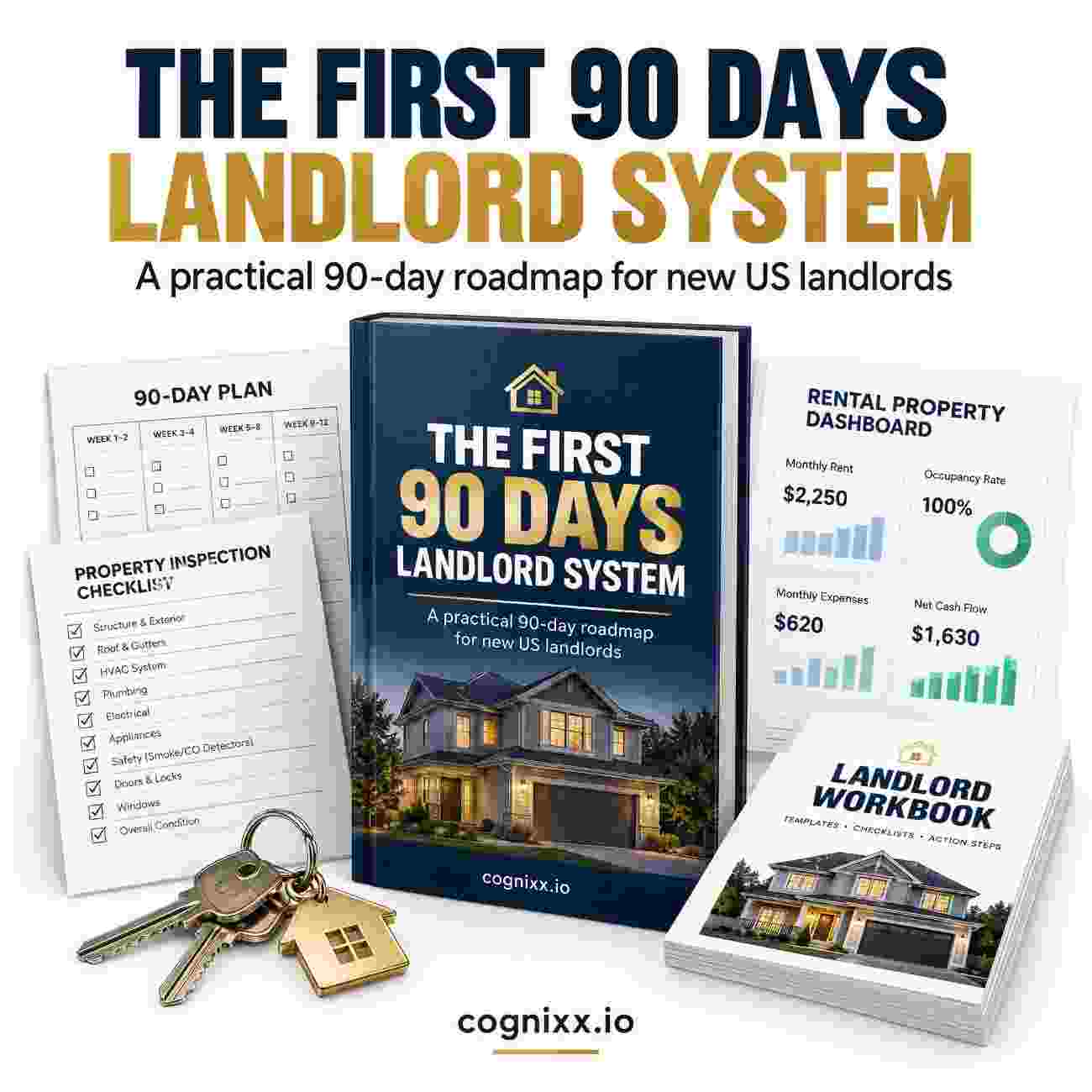
The First 90 Days Landlord System™
A Step-by-Step Operating Manual for New US Landlords
Owning a rental property can be rewarding, but becoming a landlord involves much more than collecting rent and fixing occasional maintenance problems.
New landlords must manage property preparation, insurance, banking, tenant screening, fair-housing considerations, leases, rent collection, maintenance, security deposits, vendor coordination, emergency situations, taxes and recordkeeping.
Without a proper system, small mistakes can become expensive problems.
The First 90 Days Landlord System gives new landlords and small real estate investors a structured roadmap for building a professional rental-property operation from the ground up.
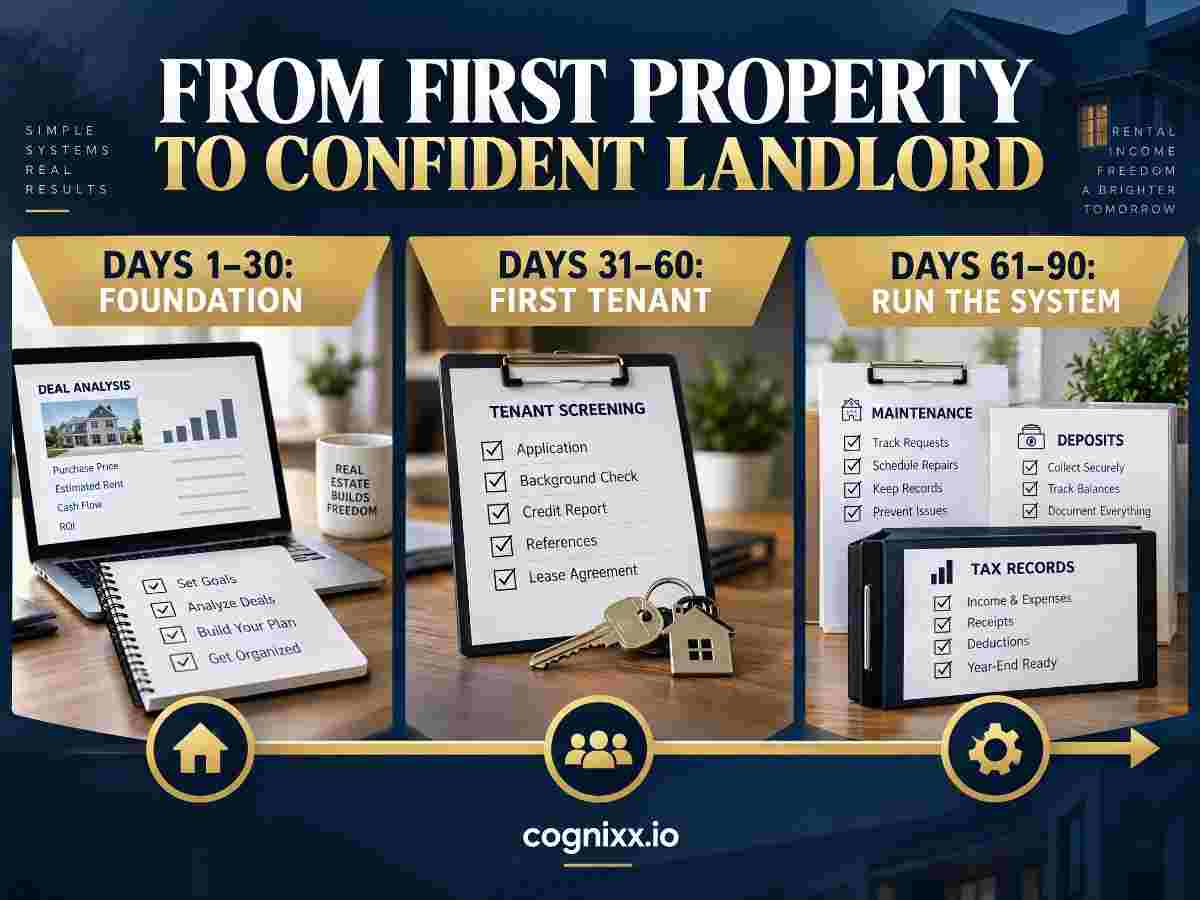
This comprehensive digital guide takes you through the critical stages of your first 90 days—from pre-closing preparation to placing your first tenant and running your rental system with greater organization and confidence.
What You’ll Learn
Build Your Pre-Closing Foundation
Prepare your rental business before you take on the responsibilities of managing a property.
You will learn how to:
- Review an inspection report
- Verify realistic rental income
- Calculate the true monthly payment
- Review title and property documents
- Check local rental requirements
- Set up landlord insurance
- Open a dedicated rental bank account
- Evaluate whether an LLC may be appropriate
- Create a reserve fund
- Build a reliable vendor list
- Prepare a move-in condition report
- Understand mortgage terms
- Organize your property file
- Set up a maintenance request system
Create a Professional Landlord Business System
Separate your personal finances from your rental activity and create a reliable recordkeeping structure.
The guide covers:
- Dedicated rental banking
- Bookkeeping categories
- Rental income and expense tracking
- Receipt organization
- Mileage tracking
- Property files
- Tenant files
- Maintenance records
- Vendor records
- Insurance documents
- Tax preparation records
Understand Landlord Insurance
Learn the difference between standard homeowners insurance and landlord insurance.
This section explains important areas to review, including:
- Dwelling coverage
- Liability coverage
- Loss-of-rent coverage
- Deductibles
- Flood insurance
- Umbrella insurance
- Vendor insurance requirements
- Insurance claim documentation
Build a Fair-Housing-Conscious Listing System
Create rental listings that focus on the property, its features and its terms rather than describing a preferred type of tenant.
You will receive guidance for:
- Identifying protected classes
- Avoiding risky advertising language
- Creating neutral property descriptions
- Preparing a listing fact sheet
- Writing professional rental headlines
- Creating social media posts
- Preparing photo shot lists
- Responding to rental inquiries
- Creating self-showing instructions
- Reviewing listings before publishing
Use Ready-to-Apply AI Prompts
The book includes practical AI prompts that can help you draft and organize common landlord tasks more efficiently.
Use prompts for:
- Full rental listings
- Rental headlines
- Social media posts
- Photo shot lists
- Inquiry replies
- Self-showing instructions
- Slow-listing diagnosis
- Property features into benefits
- Compliance checks
- Application instructions
- Tenant communication
- Maintenance triage
- Vendor scopes of work
- Quote comparisons
- Deal analysis
- Stress testing
- Expense categorization
- Tax preparation questions
Create Consistent Tenant Screening Criteria
A written screening system helps you apply the same process to every applicant and maintain better documentation.
This section includes guidance for:
- Writing screening criteria before listing
- Processing applications consistently
- Verifying income and rental history
- Reviewing credit information
- Handling criminal-history considerations carefully
- Verifying applicant identity
- Creating safe pre-screen questions
- Calling previous landlords
- Identifying potential red flags
- Understanding adverse action notices
Organize Applications and Lease Documents
Prepare a more organized application and lease workflow with helpful templates and checklists for:
- Rental applications
- Lease agreements
- Lease addenda
- Lead-based paint disclosures
- Application fee receipts
- Lease-review questions
- Tenant documentation
- Required signatures and dates
Build a Reliable Rent Collection System
Create a consistent process for collecting and tracking rent.
You will learn about:
- Online rent portals
- Automatic payments
- Payment records
- Rent-roll tracking
- Late-fee policies
- Friendly rent reminders
- Formal late notices
- Payment plans
- Common rent-collection mistakes to avoid
Manage Maintenance and Vendors
Maintenance is one of the biggest challenges for self-managing landlords. This guide provides a practical framework for handling maintenance requests and building a dependable vendor network.
You will learn how to:
- Classify emergencies, urgent requests, routine repairs and cosmetic issues
- Respond to tenant maintenance messages
- Build a list of essential vendors
- Vet contractors
- Request licenses and insurance
- Compare written quotes
- Set cost-approval limits
- Create scopes of work
- Track repairs and invoices
- Plan preventive maintenance
- Control repair costs
Communicate Professionally with Tenants
Use ready-to-customize communication templates for common landlord situations, including:
- Welcome messages
- Friendly rent reminders
- Formal late notices
- Payment-plan confirmations
- Lease-renewal offers
- Rent-increase notices
- Maintenance confirmations
- Notices of entry
- Lease-violation notices
- Move-out instructions
Protect Security Deposits
Proper documentation is essential when managing security deposits.
This system includes:
- Move-in inspection checklists
- Move-out inspection checklists
- Photo and video documentation procedures
- Normal wear versus tenant-caused damage guidance
- Move-out timelines
- Deposit documentation practices
- State-rule verification prompts
- Deposit disposition letter templates
Understand State and Local Requirements
Landlord-tenant rules vary by state, county and city. The guide provides a framework for researching and verifying:
- Security-deposit rules
- Notice periods
- Entry requirements
- Rent-increase notices
- Lease-termination notices
- Eviction notices
- Additional fair-housing protections
- Source-of-income requirements
- Criminal-history restrictions
- Rental registration and licensing requirements
Analyze Rental Property Deals
Before purchasing a property, learn how to review the numbers instead of relying only on seller projections or quick rules of thumb.
The deal-analysis section covers:
- Gross rental income
- Operating expenses
- Net operating income
- Cash flow
- Cap rate
- Cash-on-cash return
- Vacancy assumptions
- Reserve funds
- Break-even analysis
- The 1% rule
- The 50% rule
- Worked rental-property examples
- Red flags and green flags
- Rent verification
- Repair-cost estimates
- Market research
- Financing assumptions
- Investment stress tests
Prepare for Rental Property Emergencies
Build a response system for unexpected problems such as:
- Water leaks
- Burst pipes
- Gas smells
- Electrical problems
- Heating failures
- Flooding
- Broken locks
- Property damage
- Vendor dispatch
- Insurance claims
The guide helps you organize emergency contacts, vendor information, approval limits, documentation and claim records.
Organize Landlord Tax Records
Prepare better records and better questions for your CPA.
The tax and recordkeeping sections include:
- Common rental operating expenses
- Depreciation basics
- Repairs versus improvements
- Mileage tracking
- Home-office considerations
- Schedule E overview
- Form 4562 overview
- Form 1099-NEC considerations
- Estimated-tax reminders
- Receipt storage
- Record-retention practices
Who This Product Is For
This digital landlord system is ideal for:
- First-time landlords
- New rental-property owners
- Small landlords managing one to three properties
- House hackers
- Small real estate investors
- Self-managing landlords
- Landlords preparing to purchase their first property
- Investors who want a more organized rental process
- Anyone who wants practical landlord checklists and templates
What You Receive
- Complete premium PDF ebook
- 30 detailed landlord chapters
- 90-day landlord roadmap
- Checklists and action steps
- Tenant-screening guidance
- Listing and communication templates
- Maintenance and vendor systems
- Security-deposit documentation tools
- Deal-analysis formulas and examples
- Emergency-response guidance
- Tax and recordkeeping framework
- Bonus implementation worksheets
- Rental business file-organization system
- AI prompt safety guidance
Start Your First 90 Days with a Real System
You do not need to know everything about landlording on day one.
You need a clear process, reliable records, consistent communication and a system that helps you identify important decisions before they become expensive problems.
The First 90 Days Landlord System helps you move from scattered tasks and uncertainty to a more organized, professional rental-property operation.
Important Disclaimer
This product is educational and does not provide legal, tax, financial, investment or property-management advice. Landlord-tenant rules, fair-housing requirements, tax regulations, deposit deadlines and notice periods vary by location and may change over time.
Always verify current requirements with official government sources and qualified professionals in your state, county or city. The examples and financial figures in this guide are illustrative only and do not guarantee income, savings or investment performance.

Emily Davis –
Great product.
Mary Thomas –
I love this product.
John Doe –
Exactly what I needed.
Emily Davis –
Exactly what I needed.
Laura Taylor –
Great product.